Friday, October 22, 2010

TITLE SEQUENCE: The Wolfman


In the next few days I'll be posting my review on the recent remake of The Wolfman, directed by Joe Johnston and starring Benicio Del Toro, Anthony Hopkins, and Emily Blunt. In the meantime, I thought I'd give you all a collection of stills that show the interesting end title sequence that follows this sadly under appreciated film. Some of the images are pretty interesting and rather abstract, so here you go, and the review will be up soon. Enjoy.


Thursday, October 21, 2010

REVIEW: Memories


Memories
Directors: Koji Morimoto, Tensai Okamura, Katsuhiro Otomo
Year 1995

Memories is a truly amazing animated film comprised of three separate science-fiction tales that depict strange and twisted worlds where anything can happen. Each enthralling story is directed by three equally talented masterminds of the animation world, Koji Morimoto, Tensai Okamura, and Katsuhiro Otomo.

Morimoto is best known for his work on the interesting Animatrix and Robot Carnival films and in Memories he brings us an absolutely haunting tale of grief and loss in the vast void of space. Okamura, the talented creator of the Wolf's Rain series, tells a strangely intriguing story about a man who's stink literally threatens to choke the world. Lastly, Otomo, director of Neo Toyko, Akira, and Steamboy, brings together the last tale in this series of stories. In his piece, he depicts a world that is stuck in a never ending war against an unseen enemy, bound to their endless duty to their country.

This film and its series of stories was an absolute joy to watch. I'm going to do a short review for each story, because they really should be treated as three separate films. There's so much going on in each story and there are so many interesting themes going on, that they really warrant an individually analyzed look.


Magnetic Rose
Director: Koji Morimoto

Magnetic Rose is simply amazing and it's one of my personal favorites among the other stories. A small crew of space travelers suddenly come across an SOS signal moments after completing their current mission. They agree to check out the source of the beacon and to their surprise, come across a seemingly deserted and decaying spaceship surrounded by a claustrophobic cluster of debris. This rescue mission turns out to be more then they could have bargained for when an unknown entity begins manipulating their minds, showing them their deepest desires and most dreaded fears.

Heinz asks the question, "Who's bad?" 

What's great about this story, is that it has so many levels to it. We're given a great science fiction tale about a mysterious and abandoned spaceship in the middle of nowhere, but underneath this seemingly straight forward narrative, is a story about memories and how they cling to us. Director Koji Morimoto takes something abstract like memories, that only exists within ones mind, and gives it a physical presence that threatens to bring about the demise of our main characters. The premise is solid and provides some extremely tender and often horrific moments that make you question if you'd be able to handle the emotional strain that delving into these seductive and heartbreaking memories tend to inflict on their recipients.

A friendly greeting from a creepy little statue. How nice. 

The narrative for this piece unfolds as we wade through this mystery and come to realize the haunting outcome and cause of all this insanity. The story is beautifully told, giving us enough sympathetic pull for the main character of this tale, Heinz. His past is filled with tragedy and we are slowly given hints on what has happened to him in his life before taking on the long lonely job in space. The small and ingeniously applied hints are placed with perfection, drawing in the intended emotion that we need to understand that something horrific has happened in Heinz's life, but without giving away the specific event, that is until the closing sequence of the story. It's an excellent combination of mystery and humanistic intrigue that keeps us wanting to know more about his love scarred character.

A tender moment on the soap opera, "As the Spaceship Turns".

The setting for this story is also something of an original mix. We are presented initially with a space tale, rooted in the trappings of every science fiction setting filled with harsh metallic living quarters and wide open expanses of a star filled void, but we are suddenly taken for a whirl when our main characters board the abandoned spaceship only to find that it has a lush victorian decor that instantly propels us into another film from a far distant past. At times it feels like you are watching an animated period piece as the only thing that stands out as being science fiction is the cumbersome space suits that our main characters wear. It's a clever combination and a great commentary on memories and the worlds and moments that they can transport us back to.

Just one of the many mind boggling scenes in Magnetic Rose.

Make no mistake, this science fiction tale does have a heavy dose of horror. It mirrors many of the more interesting science fiction horror hybrid films out there like both Andrei Tarkovsky and Steven Soderbergh's versions of Solaris. All films deal with a main character who is being haunted by his past, never being able to let go of what once was. The cause of main character Heinz's suffering, is rather unique and offers many forms of interpretation for any viewer that is willing to just let their mind go wild. I love the subtle use of fleshing out Heinz's back story and the fact that we don't get a defined and definitive version spelled out for us. It makes it more personal when you begin to fit the puzzle pieces together and come up with your own conclusion on what everything is all about.

Sleep well Sleeping Beauty.

Koji Morimoto has crafted an amazing story with Magnetic Rose and has given it a visionary look that keeps up with its ambitious narrative. This is truly one of the highlights of Memories and the only thing I wish the filmmakers had done, is to have put this one at the end of the series of short films. Ending on this story would have really brought the whole thing together and gave a better representation of the overall title, Memories.


Stink Bomb
Director: Tensai Okamura

Stink Bomb is an odd little story that really exceeded my expectations when I first found out it was a story about a man's stink taking over Japan. It sounds silly, and it is, but director Tensai Okamura presents this crazy premise in the vein of a viral plague that quickly dwindles down the population. There are some strikingly morbid shots in this film that seem to have been a great inspiration for the likes of Danny Boyle and his 28 Days Later film and basically any viral outbreak film that has come out in recent years. In a nut shell, Stink Bomb is a dark comedy with an epic scale.

Can you smell what the Nobuo is cooking?

The story follows a young lab assistant, Nobuo Tanaka, who in trying to cure his small cold inadvertently transforms himself into a walking version of the Black Death. By swallowing an experimental pill that his company had been manufacturing, Nobuo begins to give off an odor that when inhaled, causes instant death. Throughout the story Nobuo haphazardly travels across the countryside, unknowingly causing a wave of death in his wake, all the while dodging the hundreds of attempts by his government to stop him dead in his tracks. The story is out there and that's one of the main drawing points and overall charming qualities that Stink Bomb brings to this series of stories.

Break time is over everyone. Get off your asses and get back to work!

The character of Nobuo, is quite frankly, an idiot. After contracting the fatal ability to kill everything in breathing range, he doesn't for once think that he is the cause of all of the death around him. He keeps running towards anyone that he comes into contact with and in doing so he kills anyone that could potentially save him. His stupidity is what makes the story so entertaining and the fact that with every interaction he has with seeing someone keel over at the sight of him, his odor becomes that much more potent and widespread. It's both entertainingly rewarding and excruciatingly annoying that his character can't put two and two together and see that he is bringing about the apocalypse.

I hope that they had stink insurance.

Another entertaining factor of this story is the attempts of the government to quell this overbearing stink. They throw everything they have at stopping the odor from spreading, but can't seem to contain the pungent aroma. They even try to get Nobuo's grandma to talk Nobuo into hiding out in the mountains and away from the city, but seeing that grandma is as thick headed as Nobuo, her incessant ranting over the loud speaker spooks Nobuo into chasing the chopper towards the city, thinking his grandmother is in danger and being kidnapped.

There's even a highly hilarious scene where there are hundreds of jet fighters and army helicopters trying to blow the crap out of our anti hero Nobuo as he drives down the highway towards Tokyo. Every missile misses and the pilots and their machines begin to malfunction from the literally breathtaking odor. It's just wacky fun.

 Raise your hand, raise your hand if you stink.

The mayhem of showcasing the fall of civilization and the devastation that Nobuo's stink causes on the population is projected perfectly by director Tensai Okamura. We get some beautifully rendered images of cars overturned on the highway and lifeless stretches of countryside with only the bodies of the dead to populate its frame. It's a dismal visionary masterpiece with a tongue and cheek nature that never seems to take itself too seriously, but at the same time keeps that tone for its entire run time. There really isn't anything out there like it, that I've come across at least.

Blinded by the stink.

Tensai Okamura brings a much needed sense of comedy to Memories, that lightens the mood a bit and throws something entirely unexpected at the audience. The dark comedic moments juxtaposed against the all too real visuals of what a viral outbreak would look like, really add to the overall sense of this unique piece. The bumbling antics of the main protagonist as he thwarts the advances of the government and army never cease to get old and always add to the ridiculousness factor of the story. Stink Bomb is definitely a great addition to this collection of stories and one that you won't soon forget.


Cannon Fodder
Director: Katsuhiro Otomo

Canon Fodder is probably one of the most obtuse of the stories in this compilation. It follows the everyday actions of a single family as they perform their daily routines in a war torn society, hellbent on waging a war against an unknown enemy. The world in this piece is dark and depressing and the citizens that inhabit it are oppressed beyond the limits of imagination. The endless years of fighting have turned them all into lifeless robots, just going through the motions while they forge the progress of industry and feed the machine of war. It's a bleak piece and one that doesn't really have a structured narrative.

And BOOM goes the cannon.

The lack of having a traditional story line both helps Cannon Fodder and hurts it. It helps it by making it stick out from the rest of the pack by presenting something wholly original, but at the same time it hurts it because we never truly get lost in the story or caught up with its character's lives. It branches off in random areas and blends the three characters, father, mother and son, as they go about their daily routines, and the transitions between each character is beautifully blended. It almost feels like a montage of random scenes as we get an inside look at this tyrannical society as they go about their cyclical existence. It's interesting, confusing, imaginative, and soulless, but it brings all of these conflicting descriptions together into a story that feels original and unabashedly fresh. 

Probably one of the creepiest kids you'll ever come to know.

One of the best things that Cannon Fodder has going for it is the poetic nature of its shots and editing. Scenes flow into each other as slow fades introduce us into the next family members proceedings. There are some great moments like when the young son is day dreaming during class and the large window behind him begins to fade into a cloudy sky that depicts a rather large cannon preparing to fire. This then brings us into the fathers day as he and his team begin loading the cannons for their first barrage of attacks. The story almost has a dream like quality to it, one that never seems apart of the world, only seen through a young child's eyes as he tries to come to terms with the society he lives in. It's rather engaging, but still suffers from a lack of purpose.

And I ran... I ran so far away.

The world, depicted through the eyes of Katsuhiro Otomo, is stunningly detailed and thoroughly lived in, as we are witness to the cities expansive landscape and the intricate propaganda that litters the walls of the towns congested streets. The visuals pop with an overbearing sensation that this is indeed a harsh society where your only pleasures in life come from doing your duty for the victory of the nation. Otomo paints a world without personal freedoms and luxuries. One that is choked by tradition and obedience, never halting for love, life, or individual pursuits. If there's one thing that Cannon Fodder does well, it's depicting a society where joy is a thing of the past.

Now that's one crazy looking city.

An interesting aspect of Cannon Fodder is that it visually resembles nothing of Katsuhiro Otomo's other masterful works. Akira and Steamboy both shared similar subject matter in dealing with a society that feels oppressed and over governed, but the animation was strikingly different from what Otomo brings to the table on Cannon Fodder. In this story, the animation is strangely rugged and worn, almost disturbingly off, staying true to the nature of the dark tale. Another stylistic choice for going this route, might be to resemble the child like nature that the main boy feels while growing up in a society like this. We always feel like we're viewing the world through young eyes in this story and beginning the tale with the boy waking up in bed and then ending it with him going to sleep at night drives this notion even closer to home. It makes sense of the disjointedness feeling throughout and the dream like nature of the entire piece.

Dad didn't have the heart to tell his son his drawing sucked.

Even though Katsuhiro Otomo's Cannon Fodder is a far cry from the previous two stories, it still is an interesting look into a society that is focused on one thing, war. The tone that he sets up in the beginning moments of the story, stay constant throughout the entire run time. The obtuse nature of the narrative and the total randomness of the piece helps to bring something new to the series, but at the same time might draw a lot of people away from appreciating its subtleties. It's still one amazingly crafted tale, though strange at times.

Memories as a whole, is a highly enjoyable series that has so many great moments that I would love to see a follow up created by the same three directors. All stories in their own right had something to say and had an interesting way of saying it. Out of all three, I would have to go with Magnetic Rose as my favorite, because of how well the story was executed and for the level of immersion it was able to create in such a short span of time. I highly recommend this series of short animated stories to anyone interested in seeing something new and for lovers of anime, both veterans of the medium and newcomers with a curious mind. Memories is a great collection that deserves to sit upon your shelf of favorites.

4 out of 5 stars    A Great Collection of Awe Inspiring Stories.

Friday, October 15, 2010

SCIENCE FICTION WORLDS: Blade Runner


I've been thinking about bringing a new segment to this site, one that focuses on certain specific aspects of science fiction films that I like and focus on the individual subjects that peak my interest in the genre, like the worlds, technology, and cultures. I thought it might be kind of interesting to explore these different avenues through a series of images depicting what makes these movies so damn enjoyable. So why not start off with one of the most loved science fiction movies of them all, Blade Runner. In this first segment, I'll focus on the world that Ridley Scott created and the painstaking detail that he put into making Blade Runner the stunning achievement that it is today.

Blade Runner
Director: Ridley Scott
Year 1982


The world that Ridley Scott's Blade Runner inhabits, is a place covered in darkness, painted in film noir aesthetics, and lit in neon bloomed fluorescents. Set in the city of Los Angeles in the year 2019, this alternate future for the planet Earth is a bleak and undesirable place, one that seems perpetually cast away from the sun's warm glare. This moody environment, filled with looming skyscrapers plastered with vivid flat-screen full motion billboards and cast in a constant shroud of night, is one of films most elaborately constructed worlds.


Everything is fully realized from the cluttered smog filled streets to the graceful motions of the flying cars as they soar across the city's beautiful facade. This is one of the most breathtaking and visually compelling future worlds that I've ever seen and what makes it so authentic is the fact that it is both magnificently ravishing and overtly worn and exhausted.


You can see the age on this world and feel the existence of so many hard years that the city has toiled through in order to grow into this oversized giant that it is. The growing pains have shown in the deteriorated architecture on the surface level, the concrete now worn and chipped by the struggles of the every day man. The haziness of the atmosphere adds to that tired and forlorn presentation that is on exhibition in every frame of this film. As the film opens up and shows us the overall heights that this city has risen too, we notice that there are two separate sections of the metropolis with two totally different tones to them.


These two entirely different worlds collide in this film, yet they work so well off of each other. We notice that the upper levels of the city are heavenly, free of smog and soot and illuminated by the warm glow of passing hover cars as they float across the landscape. The lower street levels are the exact opposite as they are lost in a combination of smoke, harsh lighting, and overbearing shadows, all with the congestion that comes with a population that is bursting at the seams. The gap between living situations is never commented upon, that if the people living in the high rises are better off then the street level citizens. It is all left for the viewer to decide.


What is very apparent with the society that inhabits Blade Runner, is that we get an unmistakable feeling that this is a time of great over population, when the world is practically choking to death from the overwhelming presence of its polluted residents. The sheer size of the world and the mammoth buildings that outline the cityscape for miles, presents the notion that civilization as a whole needed to build skyward in order to facilitate the growing numbers that skyrocketed as the generations began piling up.


Ridley even gives us some visual cues on how the world has come to where its at now, by showcasing over and over again the corporate logos that practically cover most of the buildings and all viewable surfaces. The signage overload might suggest that the world has now been taken over and run by corporations, fueling an economy that just couldn't sustain itself without a big brother like takeover.


Another noticeable theme throughout Ridley's film is the undeniable interpretation of an international presence, mostly an overload of asian cultures and customs. We see this from the restaurant that Harrison Ford's character frequents at, the numerous neon signage that is all in japanese, and the general feeling that you are in a futuristic version of Chinatown but on an epic scale. The closest real world place that I can think of in the world that resembles Ridley Scott's Blade Runner society, would be the overall presence of the city of Tokyo. It's neon bathed lights seem a perfect inspiration for what drove Ridley to make Blade Runner's all-embracing style.


The presence of this asian invasion seems to show that the super power that was once the United States, has now been overwhelmed by its competitor's ever growing economy, making more of a global community throughout the world of Blade Runner. This could have resulted from many things, one possibly being the advent of technology and the unifying of cultures that the creation of such devices tend to do by bridging the gap between the east and west, and the entire world for that matter. Was the world of Blade Runner forged by the creation of our very own internet and the subsequent iterations of such technology? Who knows, but it isn't as far fetched as one would believe.


One of the great things about Blade Runner, and one of the most intriguing, is that they never give you the reasoning for why the world is the way it is. There could be a million and one reason for how the world ended up the way it is, but we're left in the dark on its origins. We are just given a few clues and then left to our own imagination to fill in the missing pieces. In my opinion, that's a great way to invest us in the creation of this world. We now have a stake in it and in doing so, we believe more in the reality of it all.


There is also a great sense of paranoia in Ridley's world, that reflects a lot of the main staple points in George Orwell's novel Nineteen Eighty-Four. The idea of an oppressed society is nothing new in science fiction, seeing that many of the genre's greats have used Orwell's writings for their inspirations. The dystopian world is one of the most overused themes in many a science fiction tale, but what Ridley does with this familiar idea, is to meld it within the archetypes of film noir idealogy, creating an entirely new form of film sub-genre, Sci-Fi noir.


This fresh take of Sci-Fi noir, combining two totally different mediums is nothing entirely new. It was done before in director Jean-Luc Godard's magnificent Alphaville in 1965, but what Ridley Scott does for this sub-genre is to bring it into the real world. The city in Ridley's Blade Runner is living, breathing, and teeming with motion. There seems to be a purpose for everything in this world and each frame that we're given opens up a whole other portion of the metropolis just as thriving as the last.


The grim and grit of the street level shots in Blade Runner, capture the sights and sounds of downtown New York City in its most darkest of days. These images of something very real in our own history and our own world, come flashing back to mind when viewing Ridley's vision for Blade Runner. We instantly believe that this world could in fact be real because of our relation to the images and the fears that we share that this is what our society could end up turning into. These ideas are what make science fiction movies so great. These vivid understandings are why I enjoy the themes that are presented in the genre so much.


Ridley Scott's unique vision for Blade Runner is without a doubt one of the best conceived ideas in science fiction films today. The overall look is consistent throughout the film and it never takes you out of the moment. You see the city from the eyes of its inhabitants, feeling what they feel and experiencing what they experience. That's a testament to the work that has gone into creating this unbelievable vision.

The worlds that science fiction films are able to create and bring to life are just astounding and the various amalgamations that continue to creep onto the silver screen, never cease to amaze. I guess that's why I enjoy this genre so much and why I felt the need to enlighten anyone who's willing to listen, about one of the greatest visions of them all, Ridley Scott's Blade Runner. Check it out if you haven't already, and if you have.. give it another watch. It never gets old.

Thursday, October 14, 2010

REVIEW: I Walked With A Zombie


I Walked With A Zombie
Director: Jacques Tourneur
Year 1943

I Walked With A Zombie is a classically enthralling venture into how to create a beautifully poetic horror film. Directed by Jacques Tourneur and produced by Val Lewton, the two provide a perfect combination of artistic professionalism that brings to life a story of life, death, love, and voodoo to the silver screen. The film in my mind goes down in history as a gem that was far ahead of its time, striking a visual chord that wasn't yet seen in a horror film and wouldn't be again until seventeen years later when Mario Bava would bring into the world his greatest work, Black Sunday. Tourneur's I Walked With A Zombie, is a zombie film that begs to be seen.

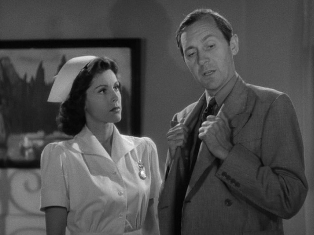
Betsy waits anxiously for her chance to get inside Willy Wonka's Chocolate Factory.

The story for I Walked With A Zombie is a simple one, but it is executed to perfection. A young Canadian nurse named Betsy, played by a stunningly graceful Frances Dee, accepts a job in the West Indies to look after a plantation owners wife. Betsy's new patient seems to be suffering from some sort of hypnotic trance or mental paralysis that has come about after she was struck by a sudden fever. Now secluded within the hauntingly empty plantation grounds, Betsy must care for this strange inflicted woman while at the same time coming to grips with the local voodoo that inhabits the islands culture. The set up is there from the very first ten minutes and from that point forward, Tourneur and company rely on the quality of the visuals and the sense of dread to move the narration along into haunting territories. 

Oh Betsy, you little pervert.

I'm ashamed to say that I'm a little behind on my Tourneur filmography, seeing that I've only seen a couple of his previous works before viewing I Walked With A Zombie. One of his best films is the exceptional satanic romp, Night of the Demon, where I was given a first hand look at the kind of imagery and atmosphere that Tourneur produced during his time as a director. Needless to say, my anticipation for viewing his voodoo piece was peeked and happily I wasn't disappointed when sitting down to see what else he had to offer. His use of strong contrasts and overlaying lines of shadow, injects a fierce tonal ambience that sets you right among the cast of characters as they trudge knee deep through the rhythmic tribal drum filled jungles.

 Shocking!!!

Tourneur's visual cues are stemmed from his past work where he dabbled in a slew of genres from Crime Dramas to Film Noirs, and everything in between. Another similar film that sits nicely next to I Walked With A Zombie, is his film Cat People, which he made right before lensing his voodoo outing. The same striking imagery can be seen in both Cat People and I Walked With A Zombie, both showing that horror films can be both brooding and beautiful.

His introduction with Cat People to the horror genre enabled him to garner a better grasp on the elements that drive the core of those kinds of films, allowing for Tourneur to produce some of the finest composed shots ever seen in the business. His technique of using his locations to their fullest is masterfully presented in the scenes where the character of Betsy paces in her room at night, surrounded by the wooden slat filled windows that encompass her Caribbean style abode. Playing with the lighting and shadows, Tourneur magically transposes these normally cumbersome shadow casted shapes and sharp lines, and overlays them right across the main actress as she peers off into the night. The scene is a quite and contemplative moment, but one that projects a sense of dread, foreshadowing things to come.

 You really think your something with that fancy new jacket.

The film also has some surprising moments within the story line that are rather unconventional to the horror genre. Betsy's character begins to have feelings for her employer, yet you're not going to get a traditional love story from this film. Instead, the filmmakers present a tragic romance that is never able to be fully realized because of the extenuating circumstances that our characters are in. Paul Holland her employer, played by a jaded Tom Conway, loves his sick wife and remains loyal to her, so Betsy is forced to do the only thing that she deems right and that's cure Holland's wife of her mental paralysis in any way, shape, or form that she can. It's an interesting turn of events and one that caught me off guard a little.

I specifically told you to bring me my morning cup cakes in bed. Do you see a bed here?

It is through this unconventional narrative mechanism that Betsy is thrust into a world that she does not understand. Her love for Holland and the unrelenting instinct to help him save his wife is the main driving force that flings Betsy into braving the wilds of the West Indies harsh environment in search of the voodoo tribe that could possibly cure Mrs. Holland. It's an interesting and bitter sweet flip on the old love story yarn and one that makes I Walked With A Zombie that much more interesting from the rest of the pack. I respect Tourneur for choosing this route and not going the cliched and narrow path followed by so many other films. Don't get me wrong, I enjoy a good love story now and then, but to see a film shake up the formula a bit is a breath of fresh air.

I think I saw one of those damn Samsquanches!

Now, I know what you're saying. Where the hell are the zombies? Well I haven't forgotten and neither have Tourneur and company. Even though there is actually only one zombie in this film, the director has gone to great lengths to make you feel the overwhelming presence of the voodoo zombie horde. He does this through the simple technique of placing some ambient moments throughout the film. Early in the film we are presented with the first knowledgeable bits that the island has a steep history of dealings with voodoo, by the unsettling rhythmic drums that can be heard far off in the untamed jungles surrounding the plantation. The first occurrence of hearing these strange chants comes when Betsy has her first meal with the plantation owner and his brother. It's a great moment that makes the audience feel that not everything is as it should be in this tropical setting and that danger is soon to come calling for our innocent Betsy.

Nothing like hanging out in the middle of nowhere to pass the time.

The atmosphere is perfect for this film and its heavy presence makes up for the lack of large moving packs of zombies. The one zombie that they do have in this film though is just creepy as all hell, with his long lanky figure and glazed over bulging eyes, the man was made to give people the willies. Darby Jones plays Carrefour the silent monster in all of its seven feet of glory, as it guards the pathway through the sugar cane fields. One of the most impressive moments of the film is when we are presented with his tall imposing figure as he looks down upon Betsy among the darkened wind rustled fields. The scene is almost poetic as it unfolds and the general feel is that of watching a poem laid out upon the screen. It's delicately paced and gracefully edited, almost as if you're watching some sort of passive nightmare where Betsy cautiously traverses across an unknown dreamscape. These moments are plenty and Tourneur shows that he really has an eye for occasions like this.

 Could you be.... the most saddest zombie in the world?

Not only does Darby Jones have the physical presence that is needed for a role like this, but he also brings a sadness to his role as Carrefour. The filmmakers and Jones' own carefully plodded out movements, really do an impressive job in giving the audience an almost sympathetic notion to his plight. He is not under his own control and is used simply as a tool in other peoples schemes. His blank face and obedient nature only adds to the great feeling of despair for his character. I enjoyed this unorthodox view compared to what we have now become familiar with in zombie lore and one could imagine that this was the precursor to George Romero's take on Bub in his 1985 film Day of the Dead.

 Peek a boo you fucks you.

The music in this film is also a great contributor in bringing about the feel of the world and making it wholly believable and tangible.  Roy Webb provides the simplistic soundtrack that really goes for the minimalist approach to the musical compositions. The understated, but not under-appreciated soundtrack,  works wonders with the quite sounds of the wind as it gently pushes its way through the empty expanses of the sugar cane fields. The accompaniment between the soundscapes and Webb's score is breathtaking in only going as far and in-depth as it needs to be without taking anything away from the already stupendous visuals that Tourneur provides. The soundtrack is basically as elegant as you can get.

Even zombies can enjoy a good ocean view.

I Walked With A Zombie is a true work of art that lifts the film up from its humble horror elements and brings a bit of class to the proceedings. The film relies on its tremendous depth and heavy atmosphere to capture a stirring story about a women in a strange land who is lost without love, yet at the same time lost because she has found a piece of that love, though unobtainable. The voodoo portions of this film and the intriguing island setting makes the visuals of this film extremely enjoyable to view. Tourneur proves that horror doesn't necessarily have to be gritty and messy. It can also be poetic and thought provoking, like lyrics from a long lost poem. The film captures the aspirations of the directors vision and makes for one hell of a great and original horror film. I highly recommend this film to anyone who enjoys a classically made horror film and for those who have a special place in their heart for zombies of all kinds.

5 out of 5 stars      A Classic and Beautiful Zombie Film

Wednesday, October 13, 2010

MUSKY! Trailer


Well, it's finished! For anyone who's in the dark on what the MUSKY! trailer is all about, well it's basically an inside joke that went way further then it was initially supposed too. A handful of years ago, my friends and I came up with a running joke about a killer musky that attacks boaters and swimmers on Canadohta Lake in Pennsylvania where we frequently hang out throughout the year during random get-togethers. One of us said we should make a short movie trailer using that concept and basically five years later we got off our collective asses and finally filmed the damn thing.

We tried to make it into a 70's / 80's grindhouse type flick with a heavy emphasis on ridiculousness and in the end I think we matched the look, feel, and sound of that era. Well, without further ado, here is the grindhouse infused musky exploitation flick....... MUSKY!